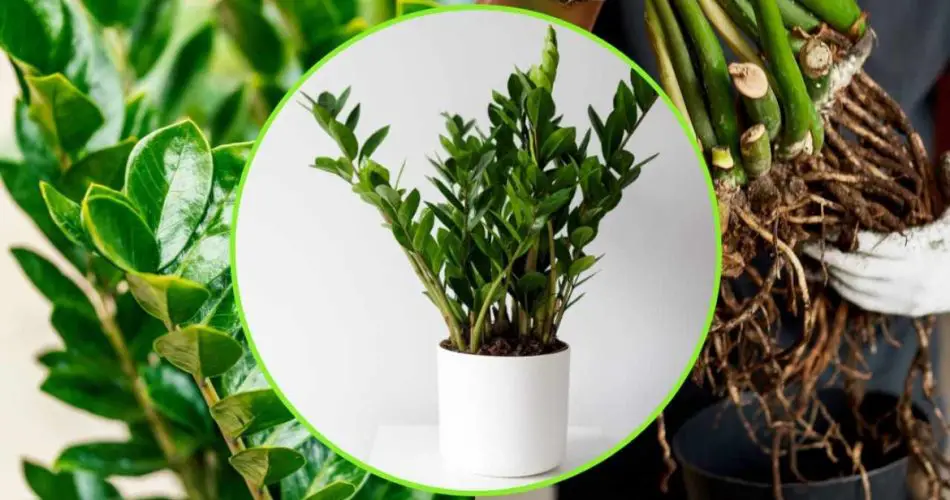
The Padre Pio plant (Zamioculcas) is an excellent indoor variety that is easy to grow . It loves places with good sun exposure , as long as it does not come into direct contact with sunlight, which can also cause burns on the leaves . It also adapts easily to more or less dark areas . However, in low light the plant would grow very slowly. It tolerates high temperatures very well, around 30 °C, but does not like temperatures close to or below 15 °C . The optimal temperature of this plant is between 18 and 26 degrees.

The plant can be placed outdoors in spring , but only in a semi-shaded place . In autumn it should be placed in a sheltered place as it suffers particularly from the cold. To prevent it from suffering in winter , it is advisable to place the Padre Pio plant near a window or in a very bright place .
The plant of Padre Pio, if you water it like this you will make it rot: this is how to do it right!

The watering of this plant should be done according to the amount of sunlight . If the plant is in bright and warm places, watering should be regular , allowing the substrate to dry between waterings. Otherwise, however, watering should be less regular, leaving a few more days between waterings. The soil of the Padre Pio plant must always be kept moist to ensure proper development of the plant. The stagnation of water, which is not appreciated at all by this variety, must in any case be controlled. Unfortunately, in the event of stagnation of water , the roots can rot , with very harmful consequences for the plant. However, in the event of a lack of watering, the leaves can turn yellow and fall off.
In addition, during the period between March and October it is advisable to add a suitable fertilizer every 20 days .
Padre Pio plant: It should not be pruned and is resistant to diseases

The Padre Pio plant does not need pruning, only the dry or damaged parts should be removed. This plant can reproduce both by division and by cutting . Division is done by removing the rhizomes of adult plants and then burying them. This process is slow given the growth characteristics of the plant. Division by cuttings is done by cutting the leaves of the plant and burying them in a pot with peat and sand. The pot should be placed in a bright place and the soil should be kept moist. Once the new leaves sprout from the ground, you must wait until next spring for the plants to develop.
The advantage of this plant is that it is particularly resistant to diseases and pests. Diseases are mainly caused by irregular watering. If they are excessive, in fact, they can cause yellowing of the leaves , if instead the substrate does not allow excellent drainage, water stagnation can cause the roots to rot and damage the entire plant.