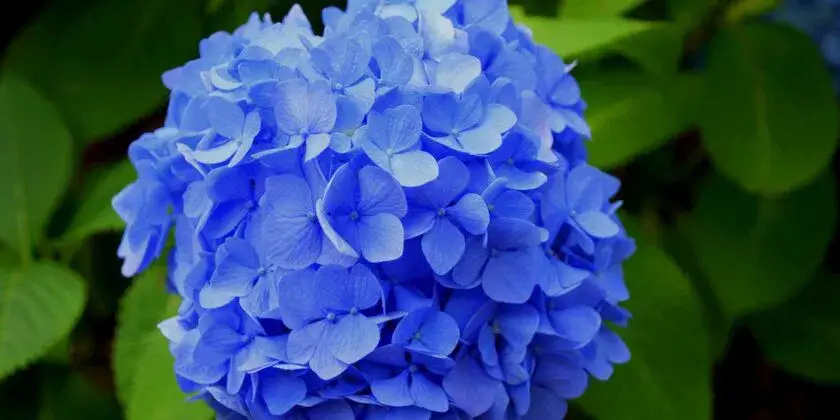
Decorating balconies and gardens has never been easier (or cheaper). Let’s look at the most recommended method to get strong, flower-rich hydrangeas.
Hydrangeas are loved and very popular for adding a touch of color to outdoor spaces and are generous plants. In addition, they are very strong and extremely adaptable. Easy to grow in the garden but also in pots. They love shade but also withstand well under the sun. In short, to properly fill our “green corner”, hydrangeas are perfect. With a few small cultivation secrets we can always have beautiful and large hydrangeas. For example, applying some methods to stimulate flowering or tricks in summer to prevent drying out.
How can you propagate plants for free?
You don’t need to buy a lot of plants to decorate an entire garden. Just a little practice to propagate hydrangeas by cuttings and you’ll be done in no time. Cuttings should be done in summer, especially between mid-July and the end of August. During this time, the chances of success are higher.
How to do it? It is enough to choose a branch with leaves (the one that does not produce flowers). Then remove the tip of a branch (cut about 10-15 cm). Then remove the leaves closest to the cut. The upper leaves, on the other hand, are cut horizontally in half. At this point we are ready for cutting.
Hydrangeas always beautiful, big and free, that’s how it works
Place in a glass of soil suitable for new crops (therefore containing peat and drainage material). Moisten the soil before planting a hydrangea.
Enter the cutting and you’re done. The new hydrangeas will need a few days to take root. In the following days, check the health of the leaves (obviously they do not have to be attached), despite a possible initial sagging. Place the cutting in a shady, cool place. Covering the cutting with the bottom of a plastic bottle could prove to be a real ace up your sleeve to stimulate the growth of the plant and create a greenhouse effect. In this case, remember to make small holes in the bottle. After a few weeks, the time of the process will come. Gently pull on the branch to see if it offers resistance. If the answer is positive, it means that the roots are gaining strength.
Another interesting technique is bathing in water. The cut must be free of the outermost leaves, while the leaves at the top are always cut in half and horizontally. Then immerse the branch (at least 10 cm long) in a container of water.
To avoid the formation of mold, it is advisable to change the water frequently. Once the roots have appeared, the cutting must be potted or buried.