Their beauty is a priori the main reason why everyone likes these plants. But that is not the only reason. In addition, orchids are also plants that can be affected by many diseases. Therefore, knowing what orchid diseases are is crucial for the correct development of orchids .
Like the vast majority of plants, orchid diseases also have very specific manifestations in the plant . Despite everything, they are delicate plants that can take time to recover from an illness. So let’s see what is the most common orchid disease that we should know. And above all, how to care for it to continue having a strong and healthy plant .
Orchid affected by root rot: if you do this, it will return strong and healthy

One of the most important aspects when it comes to orchid diseases is that they can be caused by the way we grow them. Caring for orchids implies a humid environment, which is necessary for these wonderful plants to thrive. However, it is precisely the humidity that causes a whole series of diseases that affect them. The key is balance, that is, being able to give our plant what it needs, but always with caution to avoid collateral damage.
Although they are tropical plants, orchids do not need high temperatures . In addition, exposure to humidity creates ideal conditions for the development of diseases. Poor ventilation of the roots or even poor watering can also lead to plant diseases. In this article we will look at what to do if our orchid shows signs of root rot.
Rotten roots, one of the most common orchid diseases – here’s what to do!
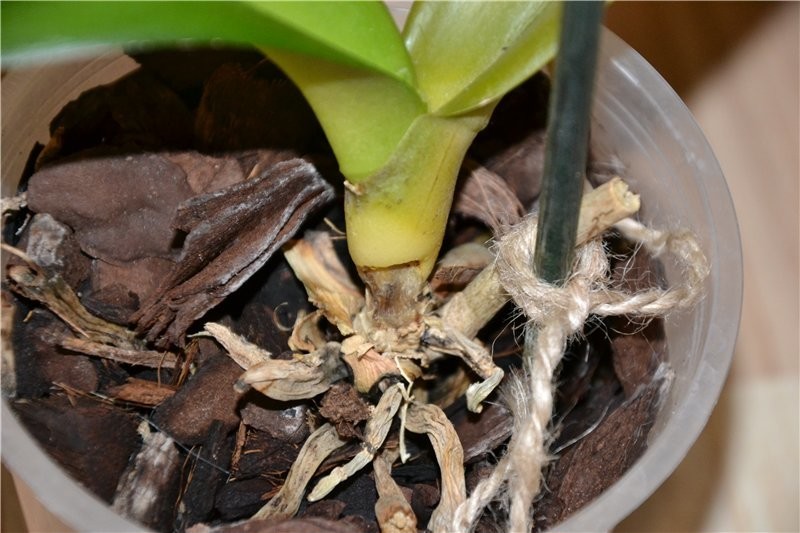
Let’s start with what is perhaps the main cause of death of these plants . Root rot is one of the most common orchid diseases and in most cases it is due to poor watering. And we are not only referring to the amount of water, but also to the tool with which they are watered or even having a bowl of water under the pot.
Rotten roots are roots that are attacked by fungi. They manifest themselves in a way that is easily recognizable visually. Their main characteristic is that they take on a brown hue and lose texture . In this case, it is important to act as quickly as possible. This disease is very serious and it is not always possible to save the plant. Fungi produce spores that travel from one plant to another, so it is important to isolate the sick plant if you have others in your home. It usually occurs because the plant receives too much water or because the substrate does not have good drainage. To prevent its spread, we must:
- Remove rotten roots with previously disinfected and completely sterile scissors
- If fungal penetration is important, apply a fungicide to the roots
- Transplanting into a new substrate and a new pot and with sufficient ventilation
- Stop watering briefly until the roots lose moisture