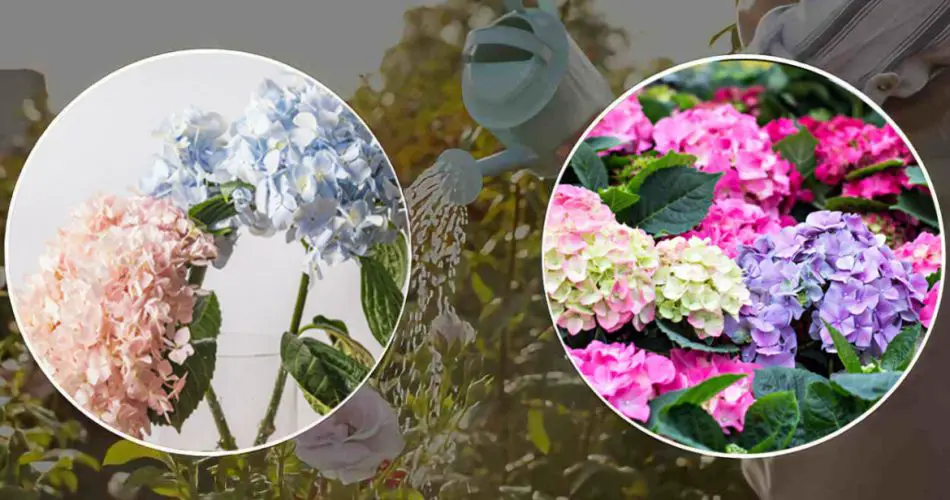
If you like flowers and plants and you have a beautiful garden, in this guide we will discuss hydrangeas , one of the most beautiful and anticipated flowers of spring and summer. Hydrangeas are shrubs that grow quite easily . It is important to know that it is a plant that prefers shade or little sunny areas to live , that is, areas where it does not receive direct sunlight . Light, yes, not full sun, because it burns its leaves and prevents flowering or dries the flowers quickly.
The temperature at which hydrangeas grow and develop is wide. In any case, it is important not to expose them to temperatures below -5 °C and above 30 °C. Extreme temperatures cause them to freeze or burn and, as a result, not bloom .
It is very important that, as mentioned above, they enjoy natural light, preferably in low light.
How to plant hydrangeas in pots, this is what you need

Remember that hydrangeas are shrubs. This implies a large growth, in fact they can reach a height of up to 3 meters . To plant hydrangeas, an important tip is to plant them in pots with a diameter of at least 30 centimeters or typical long planters (at least about 60 x 25 cm) .
Hydrangeas develop many roots and require a lot of water, so a smaller pot is uncomfortable. When planting them, make a hole in the very wide earth , place the plant in the pot and fill it halfway with the substrate. Water so that the earth is compact and then fill it to the top with the substrate. Water again. If during the first waterings the substrate compacts and loses a little level, it is advisable to add a little more substrate to cover the rebellious roots that may have formed.
Watering Hydrangeas: How to Do It Right
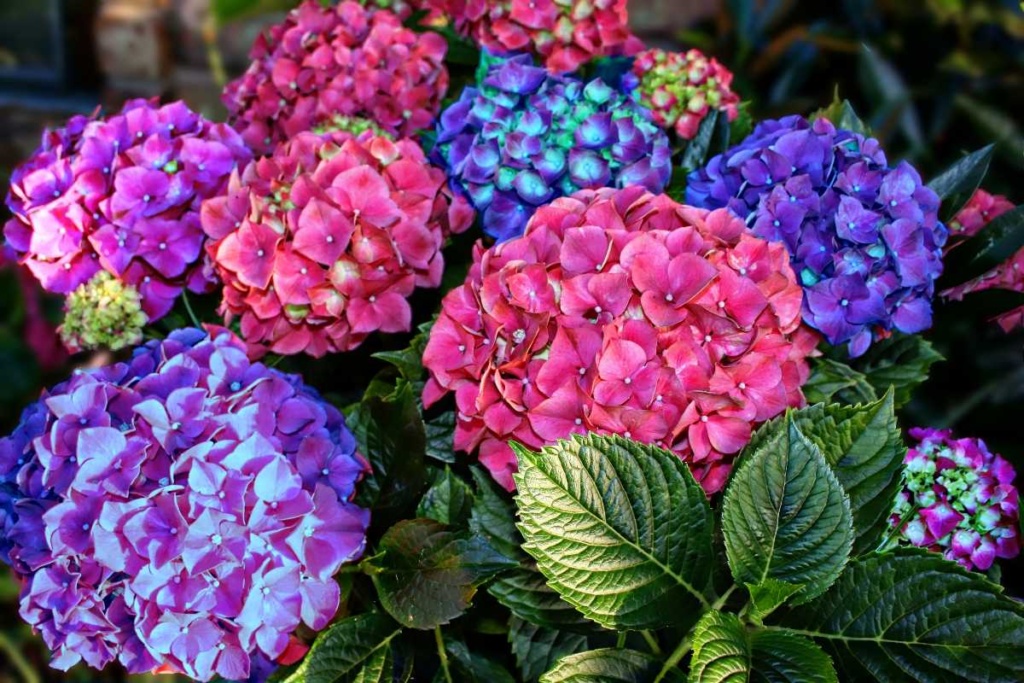
Just as important as the lighting conditions, or more so, is the need to water the hydrangea . This plant needs a lot of water .
- Watering in spring and summer should be done practically daily . The aim is to keep the substrate moist .
- The preferred water of the hydrangea is rainwater . In the absence of rainwater, distilled water is recommended. Tap water, especially the most calcareous, is not very good because it can cause iron deficiency in the substrate and the consequent yellowing of the leaves .
- To water hydrangeas, the best time is early morning or late afternoon (or evening). In summary, the sun is not strong, as the evaporation of water can cause burns on the foliage .
- From time to time it is convenient to spray water on the leaves of the hydrangea to keep them hydrated. In any case, this should be done at sunset so that the rays do not create a mirror effect that burns the leaves of the plant.
Yellow leaves of hydrangeas, it is important to use a specific fertilizer
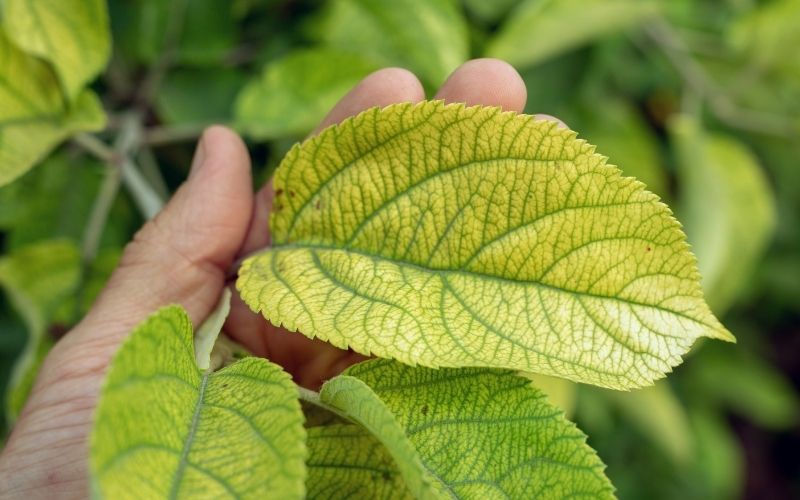
Since hydrangeas need regular watering, this leads to a dilution of nutrients in the substrate, that is, we must add nutrients to the substrate regularly. The most suitable fertilizers are those specific for hydrangeas , but you can also use a slow-release fertilizer. In any case, if the leaves, especially the new ones, turn yellow , it is due to iron deficiency , so it is advisable to apply an iron chelate immediately .
How to prune hydrangeas to have a lush bloom

Annual pruning of hydrangeas is important to ensure that our plant is healthy and continues to bloom every year. Pruning hydrangeas should be done immediately after winter to prevent frost from damaging the plant. Cutting a cutting is like a small infected wound on the plant, and frost can damage it.
To carry out the pruning it is important to differentiate the types of branches. Depending on the type of branch, they may or may not need to be cut and are cut in one way or another. In any case, the branches should be cut at a 45º angle. Branches that bloomed the previous year should be cut by a third, a few centimeters above some buds. In the case of flowers that dry out , we recommend cutting them as soon as they have wilted so that the plant does not lose strength unnecessarily.
The friends that grew last year are not touched! This is very important because young branches that have not produced flowers will most likely produce new flowers on the new year. It is also convenient to cut old branches that are 3 or 4 years old so that the plant does not lose strength. For this reason , we recommend pruning 50% of these branches .
After the annual pruning, it is important to fertilize the soil so that the growing season begins with a complete mix of nutrients.